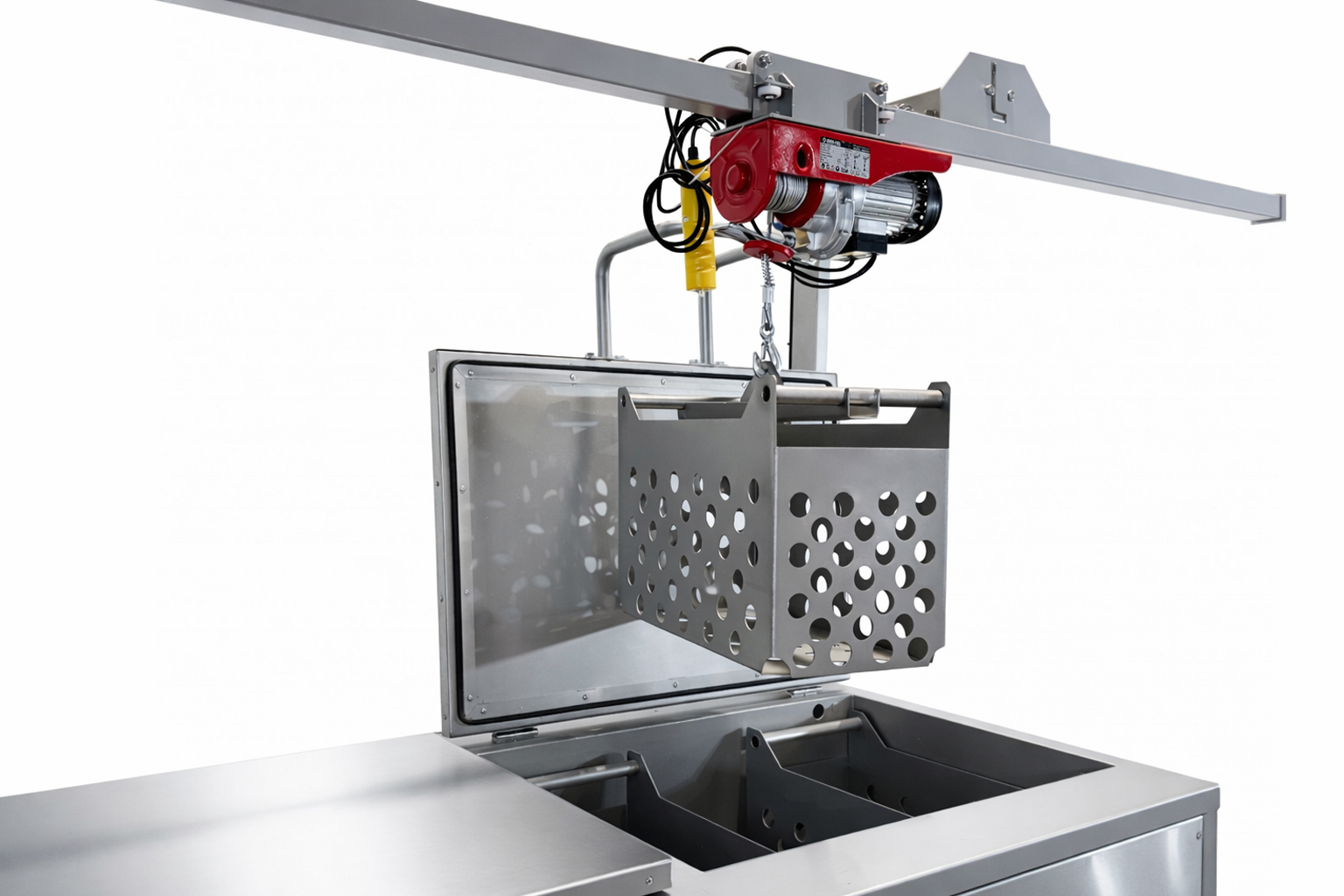
Loading products into batch baskets
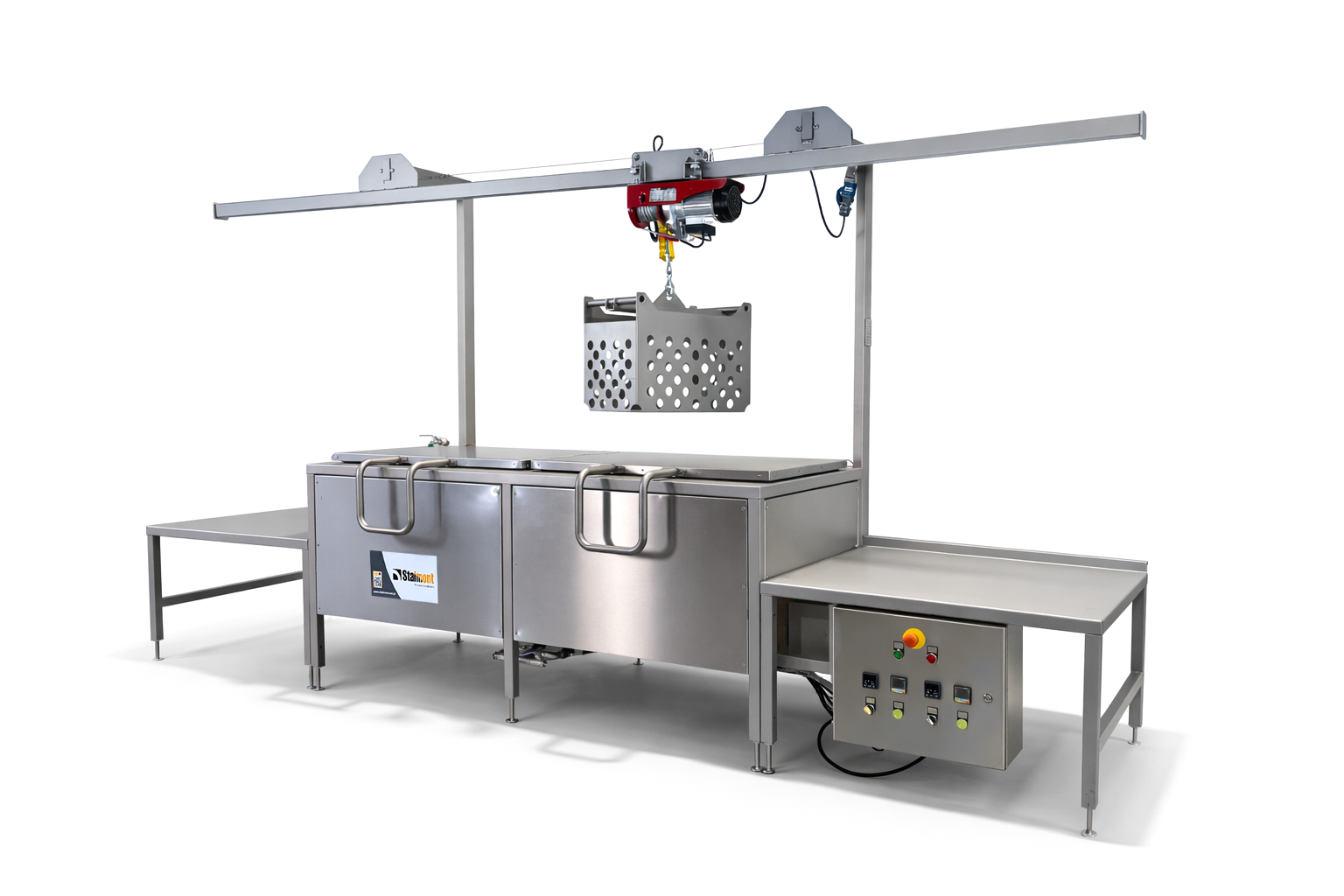
Products in jars, bottles or cans are placed in batch baskets. A temperature sensor is placed in one of the packages to measure the temperature inside the product.
BATH PASTEURIZER
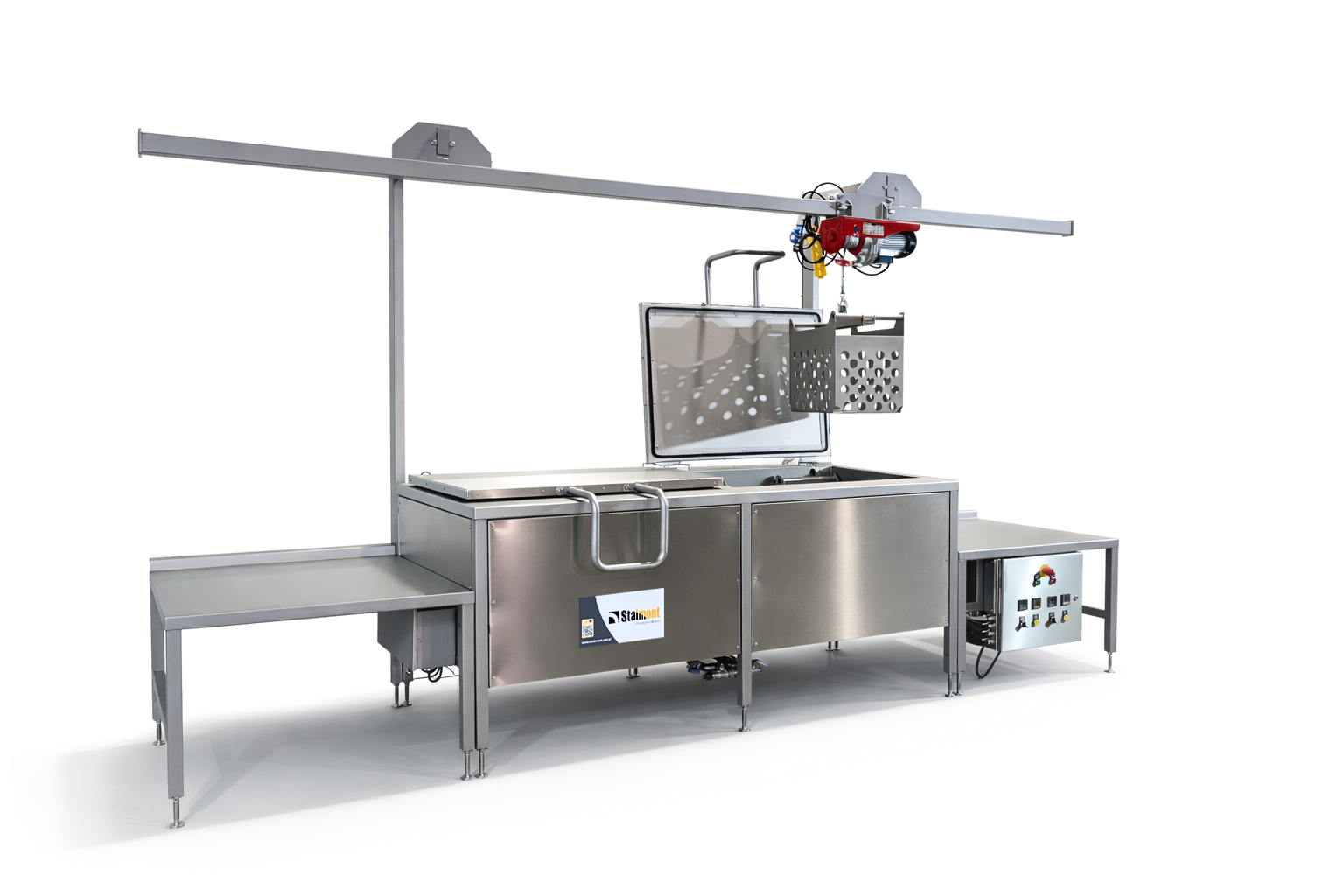
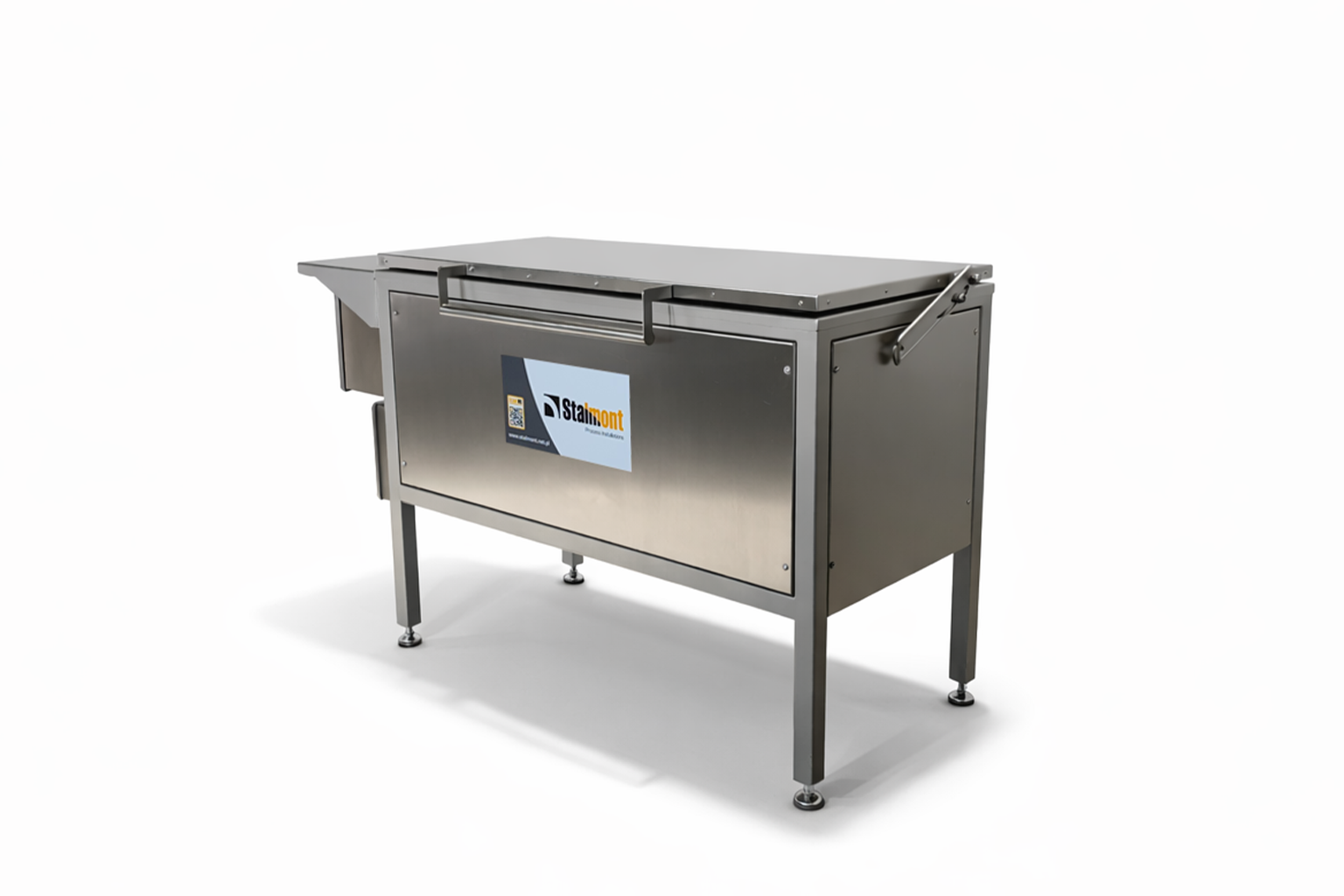
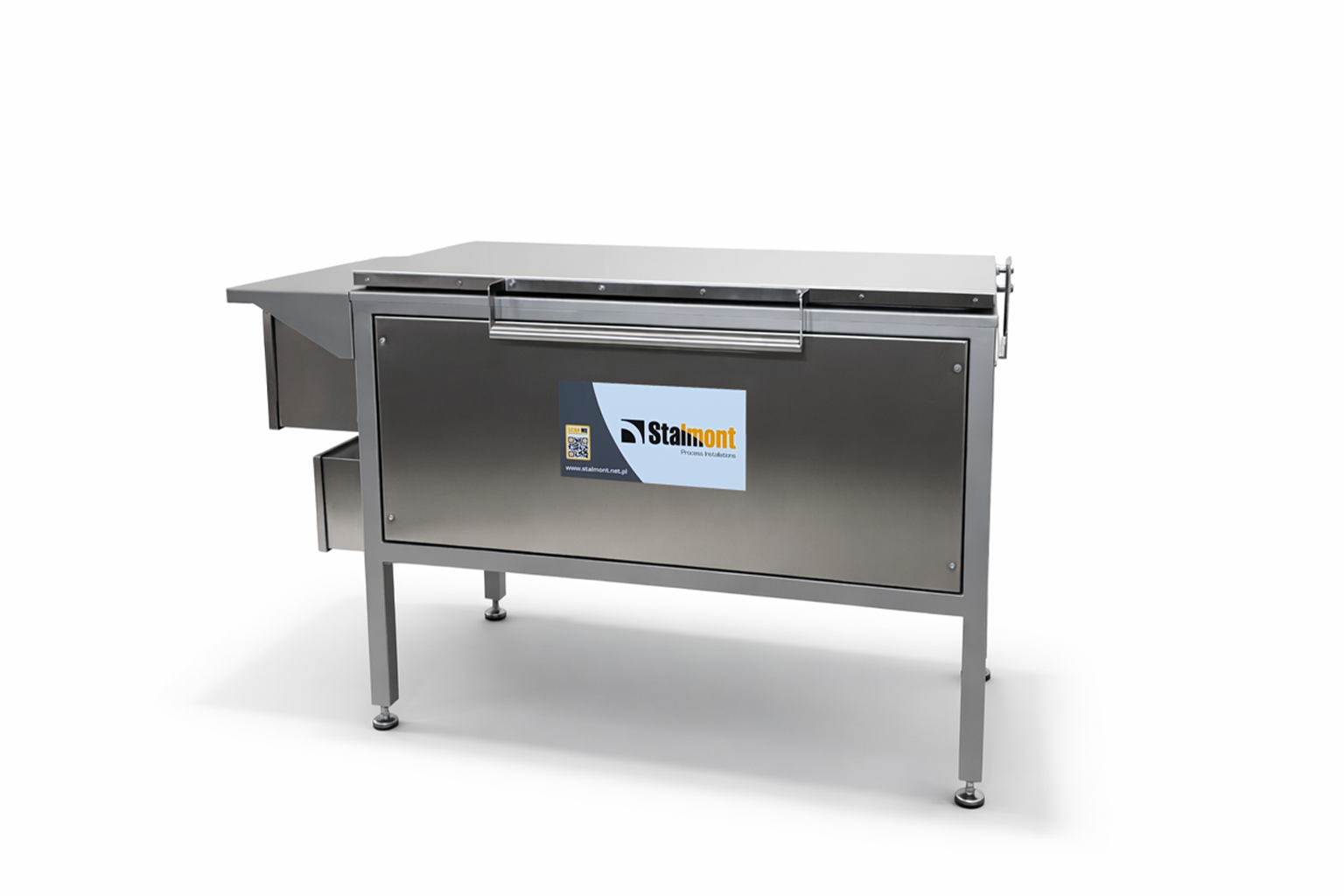
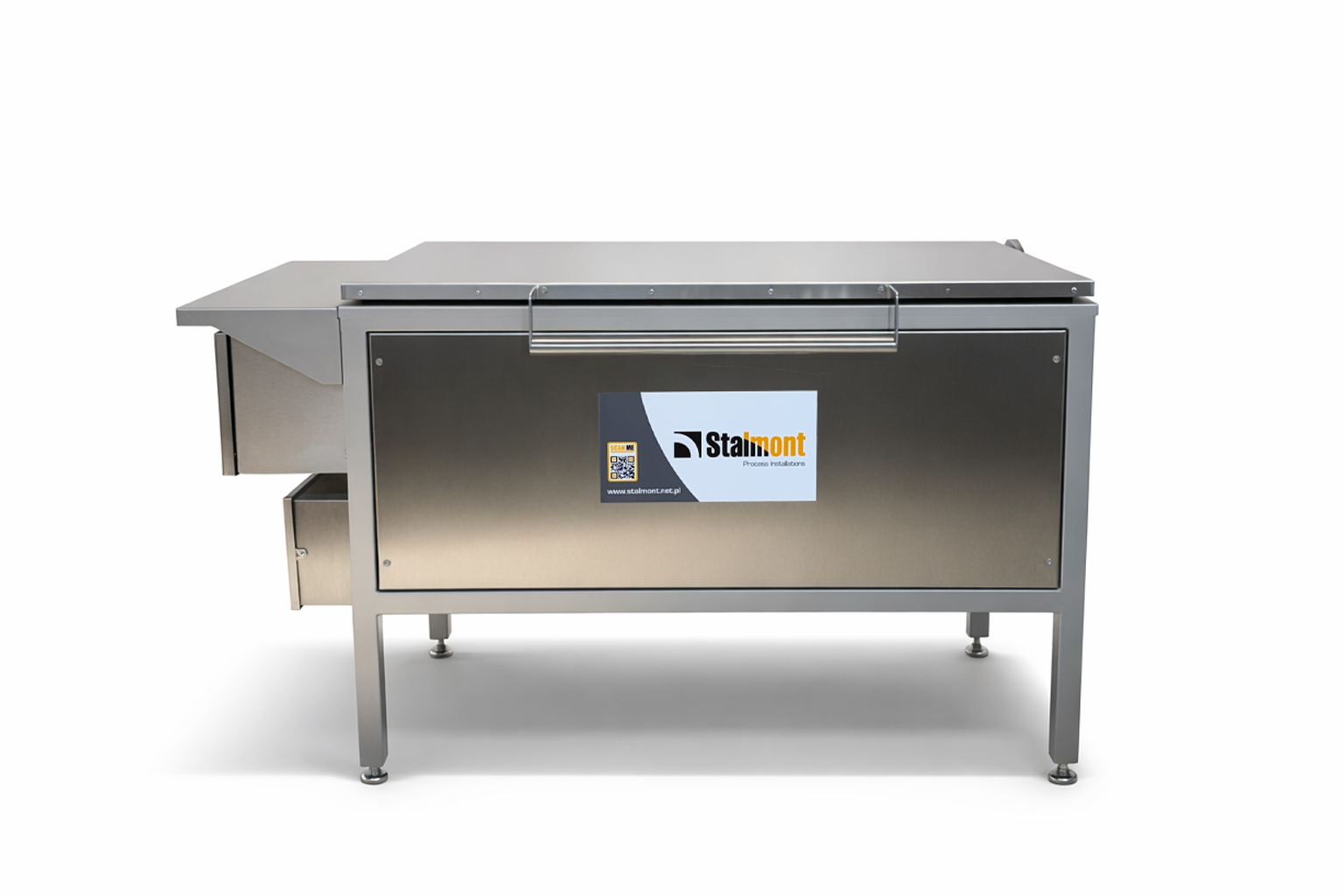
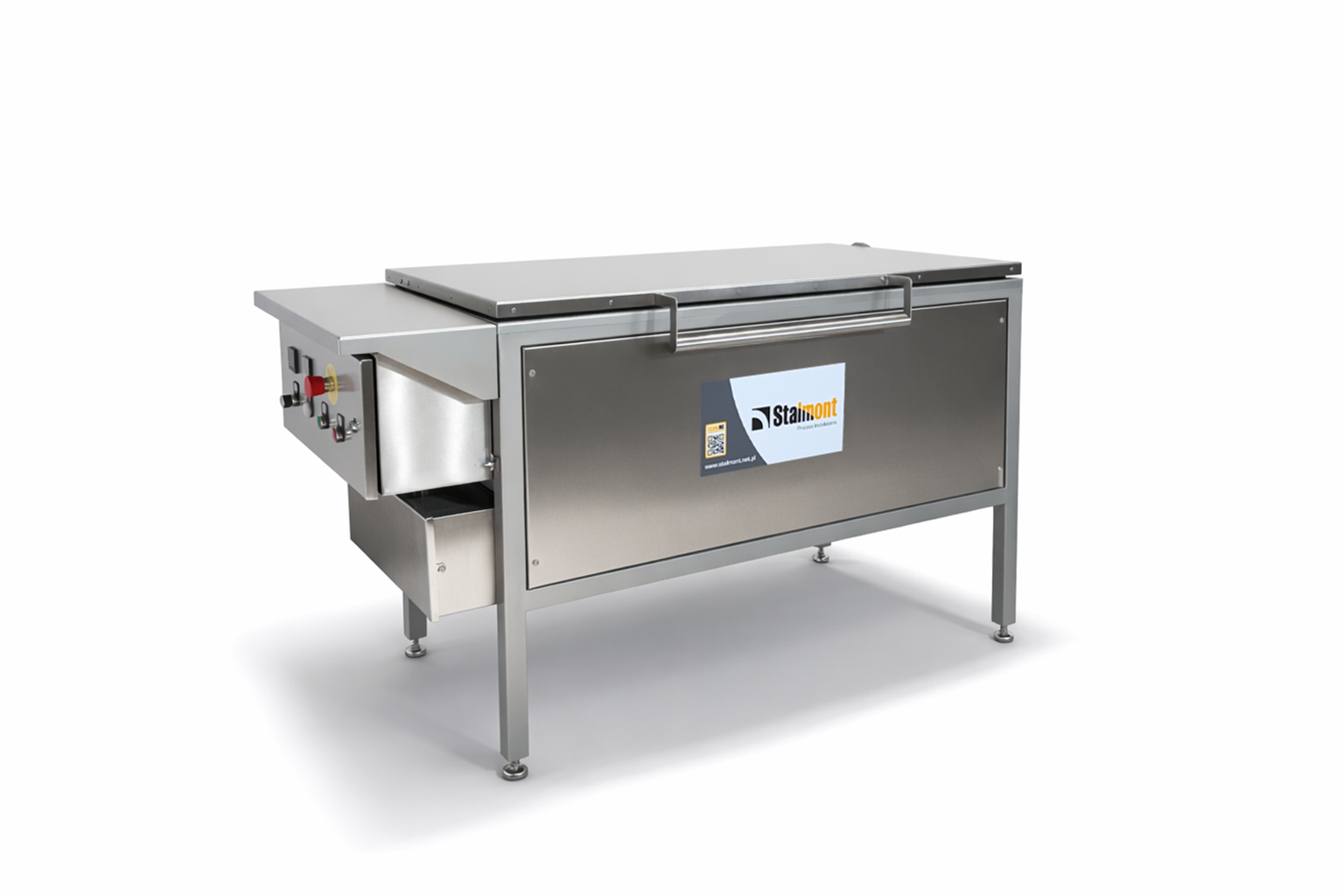
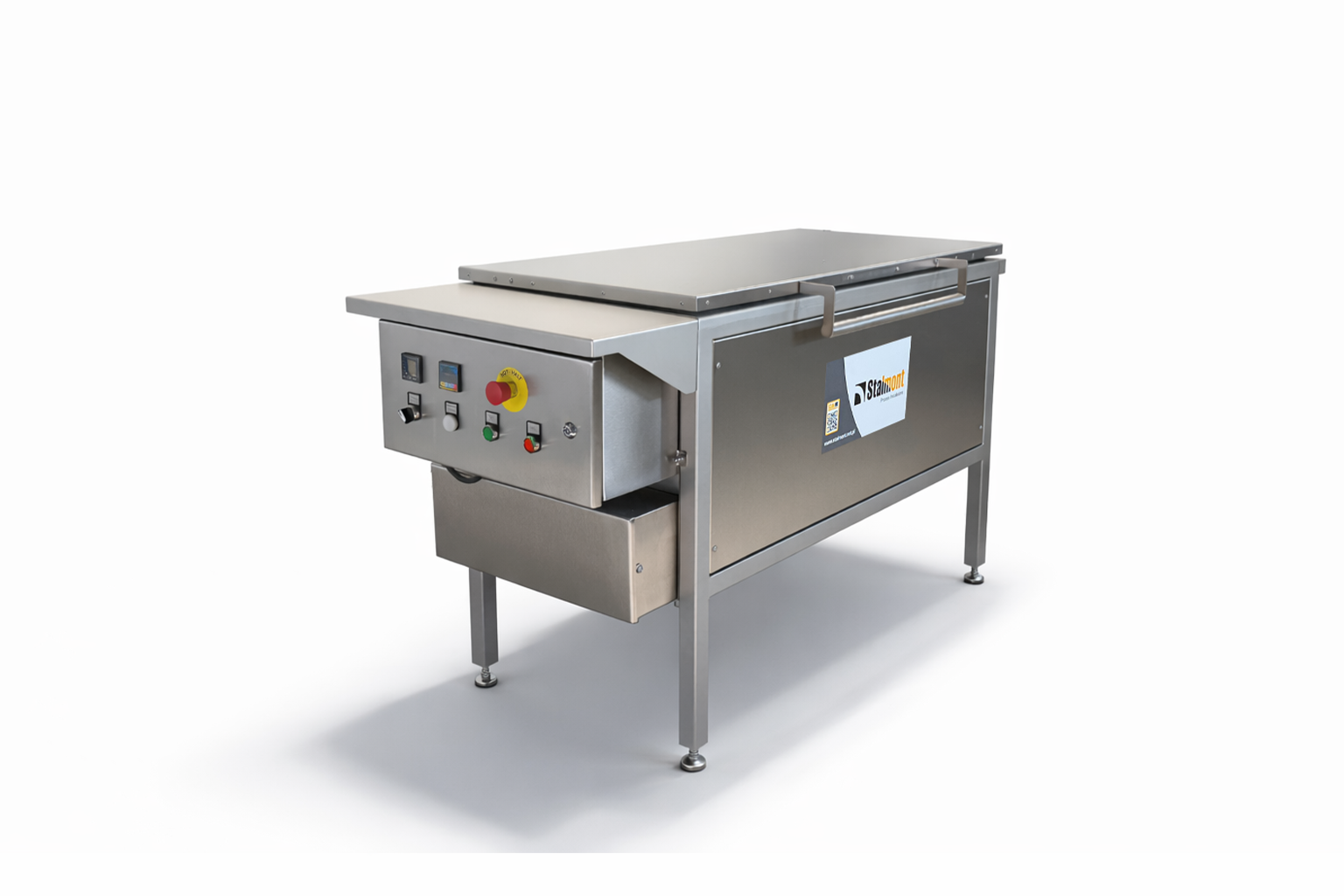
Batch water pasteurizer for thermal processing of products in jars, glass bottles, PET bottles and aluminum cans. It enables pasteurization of finished packaged products in a water bath, ensuring control of temperature, process time and repeatable production quality.
WHAT IS IT USED FOR
The bath pasteurizer is used for thermal processing of finished products already closed in packaging. The machine allows jars, bottles and aluminum cans to be pasteurized in a water bath, so the entire product batch is heated evenly to the set temperature.
This solution works well when the product is first filled or packed and only then thermally preserved. The bath pasteurizer allows temperature and process time to be controlled, helping increase product shelf life and maintain repeatability between production batches.
MODELS OF BATH PASTEURIZERS
Not sure which model to choose? Contact us and we will help select the right bath pasteurizer for your packaging type, product and expected batch capacity.
Talk to an expertHOW DOES A BATH PASTEURIZER WORK?
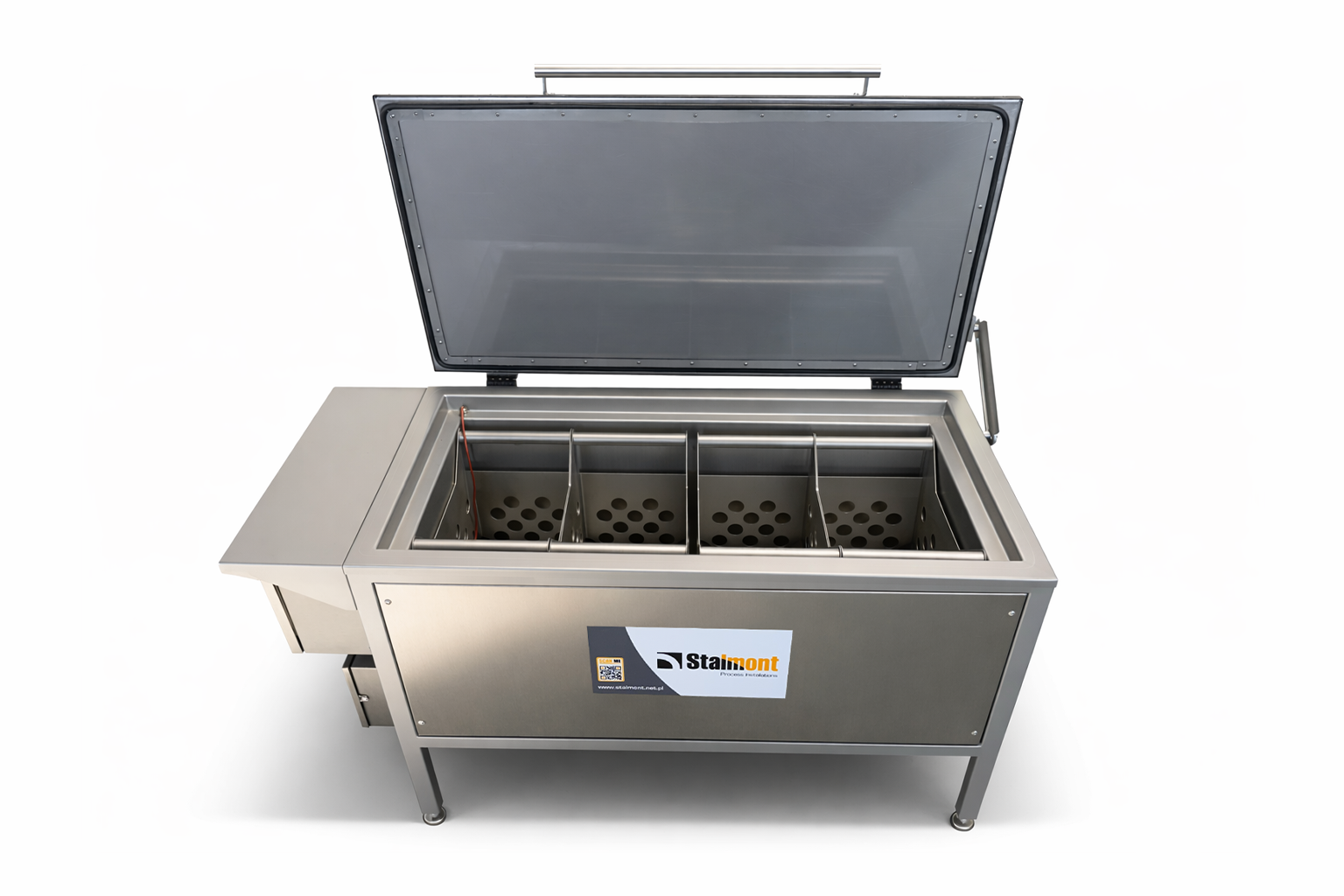
Products in jars, bottles or cans are placed in batch baskets. A temperature sensor is placed in one of the packages to measure the temperature inside the product.
The baskets with products are placed in a pasteurizer filled with water. The machine works in batches, allowing the entire batch of packages to be processed in one cycle.
The operator sets the pasteurization temperature and product holding time after that temperature is reached. The system monitors the temperature in the product core and automatically runs the process according to the set parameters.
After the set product temperature is reached and held for the specified time, the pasteurizer ends the cycle. The baskets are then removed and the products can be sent for cooling, labeling or packaging.
CONSTRUCTION OF A BATH PASTEURIZER
1
2
3
4
5
6
It limits heat loss during pasteurization and helps maintain stable water temperature in the bath. It supports a repeatable process for subsequent product batches.
It locks the cover in the open position, preventing it from closing on its own. This allows the operator to safely insert and remove the batch baskets.
They are used to arrange jars, bottles or cans before pasteurization. One basket can hold about 15–20 standard 0.5 l bottles, depending on their diameter and shape.
It measures the temperature directly in the product core, not only in the water. This allows more precise pasteurization control and repeatable process parameters.
The bath is filled with water, which is then heated by heaters. Insulation reduces energy loss and helps maintain stable water bath temperature.
It allows the operator to set the pasteurization temperature and product holding time. From the panel, the operator can start, stop and control machine operation.
See the bath pasteurizer in operation
BATH PASTEURIZER IN A PRODUCTION LINE
Bin tipper
View device
Washer with
Belt press
View device
Bottle filling
BathThe product first goes to a bin tipper, which enables safe feeding into the line. Then fruit or vegetables are washed, crushed and pressed, and the obtained juice goes to a buffer tank. After filling into bottles, jars or cans, the finished packages can be placed in a bath pasteurizer, where the entire batch is thermally preserved in a controlled water bath.
FREQUENTLY ASKED QUESTIONS
The price of a bath pasteurizer usually ranges from approx. 6,800–18,600 EUR net. The final price depends on the selected model, bath capacity, number of loading baskets, heating power, equipment and the degree of adaptation to the customer’s process. We prepare a detailed offer after determining the packaging type, product and expected capacity.
The capacity of a bath pasteurizer depends on the product type, packaging size, initial temperature, pasteurization temperature and holding time. One basket holds approximately 15–20 standard 0.5 l bottles. The smaller pasteurizer with 4 baskets allows about 60–80 0.5 l bottles to be pasteurized in one cycle, while the larger model with 8 baskets allows about 120–160 0.5 l bottles in one cycle.
Pasteurization time depends on the type of product, packaging capacity, initial temperature and required process parameters. The pasteurization of juice will be different from that of a thick mousse, sauce or product with a larger amount of solid fractions. The operator sets the pasteurization temperature and holding time, and the system starts the actual countdown after reaching the required temperature in the product.
The bath pasteurizer is suitable for products packed in jars, glass bottles, PET bottles and aluminum cans, provided that the packaging is suitable for thermal processing in a water bath. The machine is useful where the product is first filled or packed and only then pasteurized.
Yes, the bath pasteurizer can work as a jar pasteurizer. Jars with product are placed in batch baskets, then immersed in a water bath and heated according to the set temperature and holding time. This solution works well for preserves, sauces, mousses, purees, jams and other products in jars.
Yes, both bottles and aluminum cans can be pasteurized in a bath pasteurizer. It is important to properly select the temperature, process time and method of arranging the packages in the baskets. Thanks to this, the machine can be used not only for jars, but also for juices, drinks and other products packed into bottles or cans.
A bath pasteurizer works in batches and pasteurizes the finished product already closed in the package. This makes it suitable for liquid and thick products, products with particles, solid fractions or products that could cause problems in a flow pasteurizer. A flow pasteurizer processes the product before filling, while a bath pasteurizer processes the entire batch after packaging.
One of the packages is equipped with a special lid with a temperature sensor. The product is poured into the prepared package and then placed in the basket together with the remaining packages. The controller reads the temperature directly from the product, not only from the water, making the pasteurization process more accurate and repeatable.
The bath pasteurizer can be used for many food products in packages, including juices, drinks, purees, mousses, sauces, jams, preserves, fruit and vegetable preserves and higher density products. In practice, the most important thing is to select the right temperature, process time and packaging for a specific product.
The lead time for a bath pasteurizer is usually 4 to 8 weeks. The exact date depends on the selected model, configuration, component availability and current production schedule.
We provide a 36-month warranty on the welded structure of the pasteurizer. For purchased components, such as heaters, automation elements, sensors or other components, the warranty period is usually from 12 to 24 months, depending on the component manufacturer. After the warranty ends, we provide post-warranty service and access to spare parts.
Yes, we provide service for bath pasteurizers, technical support and access to spare parts. We help with machine start-up, operating parameter settings, product temperature sensor operation and solving problems that may arise during operation.
Yes, before purchasing, you can see how the bath pasteurizer and the entire production line work. We cooperate with plants that use our machines, so we can organize a demonstration during real production. The possibility of presentation depends on plant availability and the machine operating schedule.
The payback time depends on the number of pasteurized packages, finished product price, labor costs and the duration of one cycle. The smaller model holds approximately 60–80 0.5 l bottles in one cycle, while the larger model holds approximately 120–160 0.5 l bottles in one cycle. On this basis, you can calculate the daily capacity of the machine and compare it with the costs of manual or less repeatable pasteurization.