
- Belt press
- Washing and shredding machine
- Bin tipper
- Pasteuriser
- Bag In Box Filling Machines
- Juice collection tank with pump
- Fruit and vegetable pulping machine
- Boiling pan
- Bath pasteurizer
- Vacuum evaporator
- Mobile CIP station
- Semi automatic bottle filling machine
- Bag filter housing
- Tunnel cooler
- Pulp heater
- Agitator tank
- Mobile NFC juice press


Vacuum evaporator
The WP-120 vacuum evaporator is a modern device designed for concentrating juices, purees, syrups, and other food products under reduced pressure. By using vacuum technology, the evaporation process takes place at temperatures lower than the boiling point of water, which helps preserve the natural flavor, aroma, and nutritional value of the raw material.
The machine is made entirely of AISI 304 stainless steel, ensuring high durability, easy cleaning, and full compliance with sanitary standards. Equipped with a scraper agitator, water jacket, and thermal insulation, it provides uniform heating and effectively prevents product burning.
Operation is controlled via an intuitive panel with temperature adjustment, while the built-in vacuum system and steam condenser ensure efficient and energy-saving performance. The tilting tank with an inspection hatch and DN80 discharge outlet facilitates operation and emptying after each cycle.
The WP-120 evaporator is a reliable solution for food producers seeking an efficient way to concentrate products while maintaining their highest quality.
Contact us
Feel free to contact us. We we will be happy to answer any questions you might have.
Technical Specifications
| Vacuum Evaporator | |
|---|---|
| Connected power: | 12,5 kW |
| Electric heater power: | 12 kW |
| Tank capacity: | AISI 304 |
| Tank capacity: | 120 L |
| Inner tank dimensions: | Fi=250 H=600 |
| Temperature control: | Via regulator |
| Discharge outlet: | DN80 |
| Vacuum pump: | Yes |
| Steam condenser: | Yes |
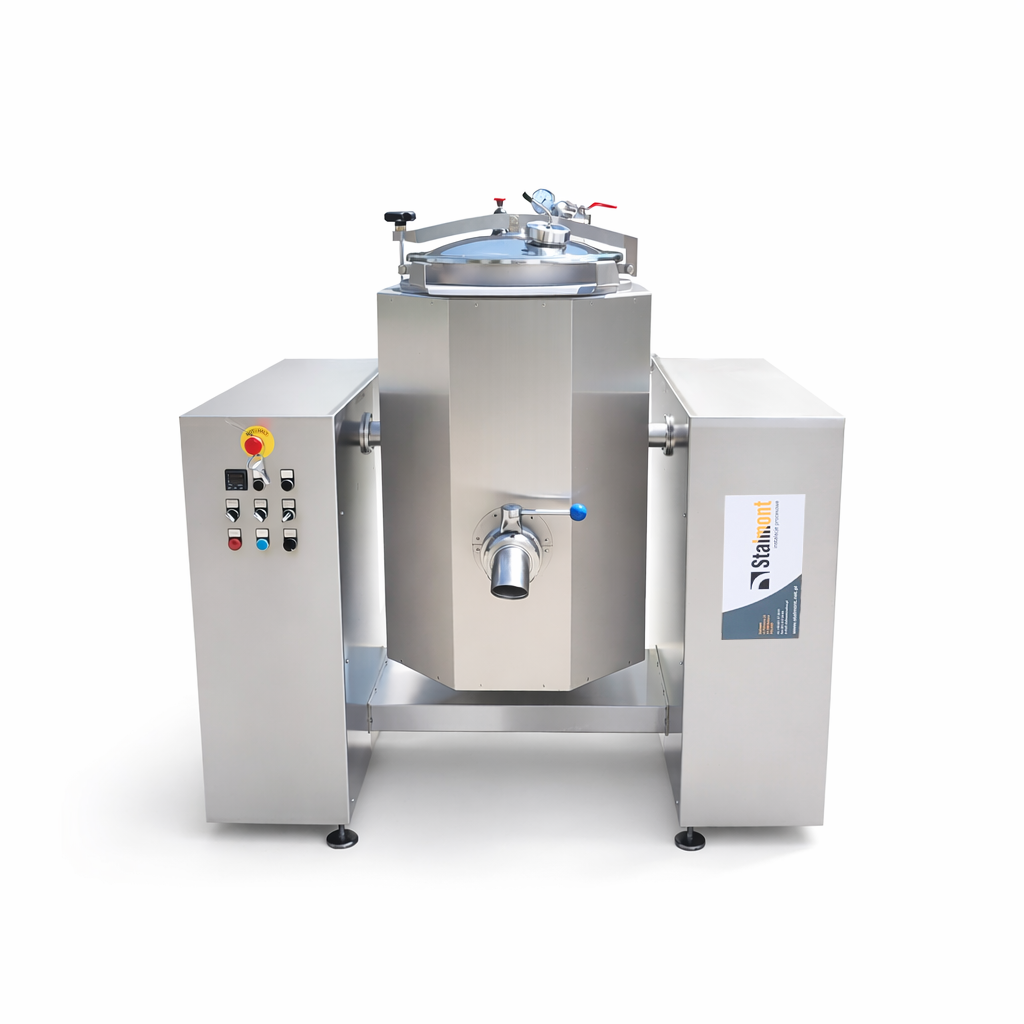

Vacuum evaporator, efficient concentration and evaporation for food processing
♨️ Evaporation and concentration under vacuum
The vacuum evaporator is designed for processes such as juice concentration and evaporation of liquid food products under reduced pressure. Operating under vacuum allows the process to take place at lower temperatures, limiting thermal degradation and ensuring a stable, high-quality concentrated product.
🍏 Preserving juice and product quality
Thanks to vacuum operation, the concentration process is gentle to the product. As a vacuum evaporator for juices, the unit helps preserve natural flavour, aroma and colour, which is essential in the production of NFC juices, nectars and other fruit- and vegetable-based beverages.
🫙 Evaporator for concentrates and purées
The machine is widely used as a vacuum evaporator for concentrates and as an evaporator for purées. It enables controlled removal of excess water from products with high pulp content, preparing them for packaging, pasteurisation or further processing stages.
🥕 Processing of fruit and vegetable products
The vacuum evaporator can be used for processing fruit and vegetable products. As an evaporator for fruit preparations and vegetable-based products, it allows flexible adjustment of process parameters to different raw materials, ensuring repeatable results and consistent product quality.
⚙️ Industrial vacuum evaporator for food plants
As an industrial vacuum evaporator, the unit is designed for intensive operation in food processing environments. Stainless steel construction and proven technological solutions make it a reliable vacuum evaporator for the food industry, meeting hygienic and production requirements.
🏭 Vacuum evaporator as part of a production line
The machine operates as a vacuum evaporator that can function independently or as a vacuum evaporator integrated into a production line. It works seamlessly with presses, pasteurisers and filling systems, supporting continuous processing and automation in modern food plants.
STALMONT
Our products
We offer competitive prices, short lead times and full support at every stage of cooperation.


