Belt press

Belt press for pressing juice from fruits and vegetables

Designed for long-term production, stable operation and high juice yield. We help select the right press model for your production capacity, raw material and process layout.

What is it used for

What is a
belt press used for?

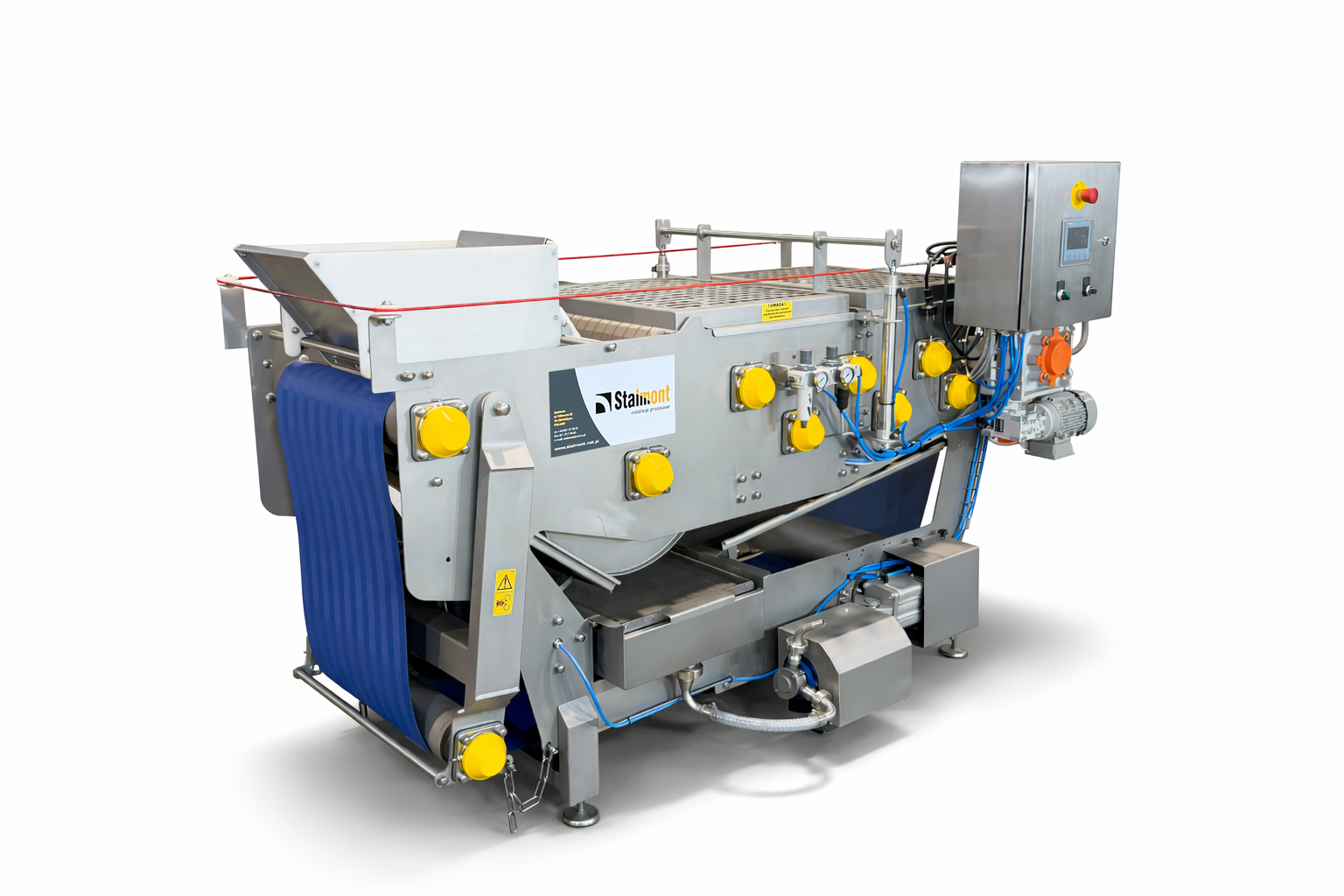
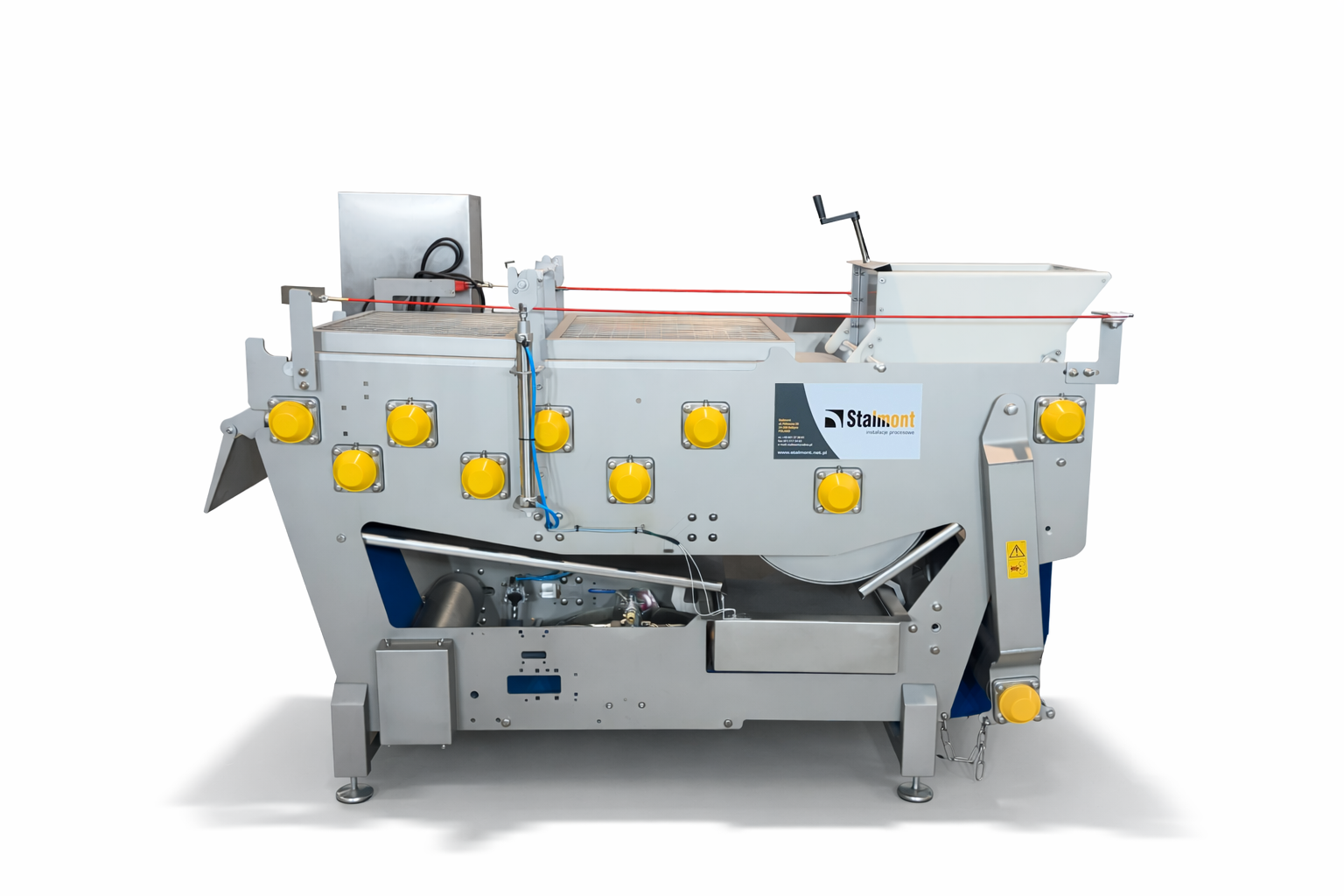
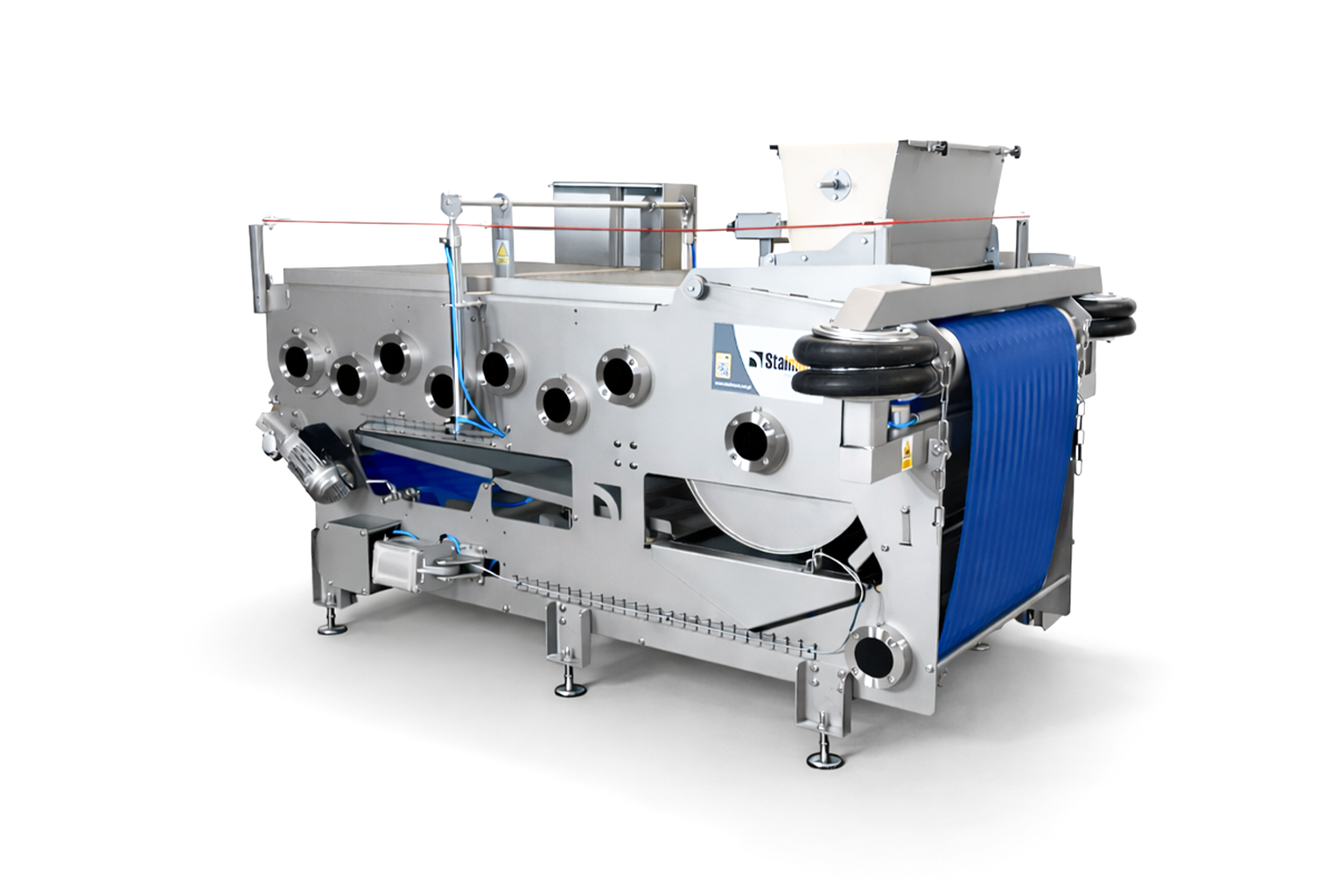
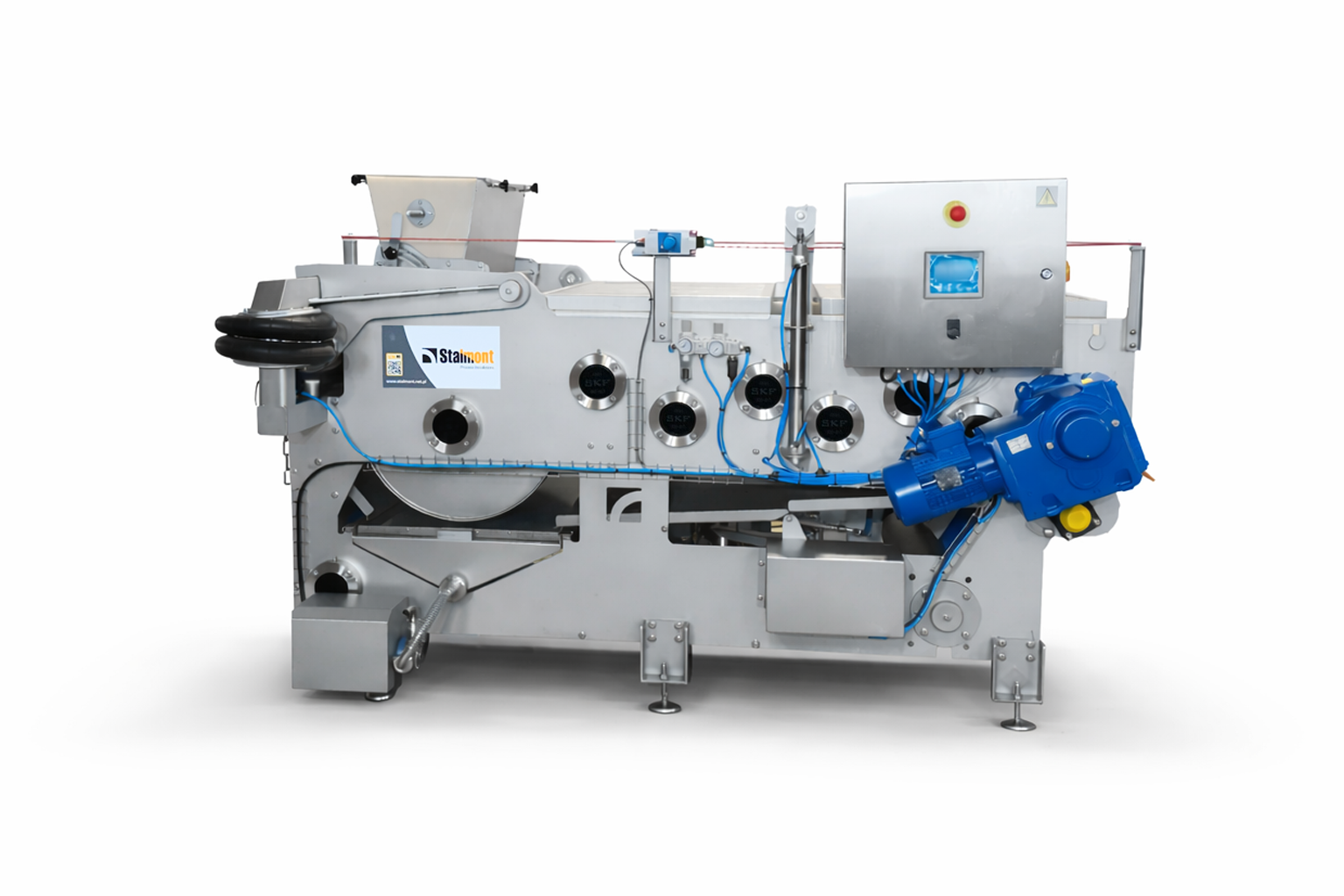
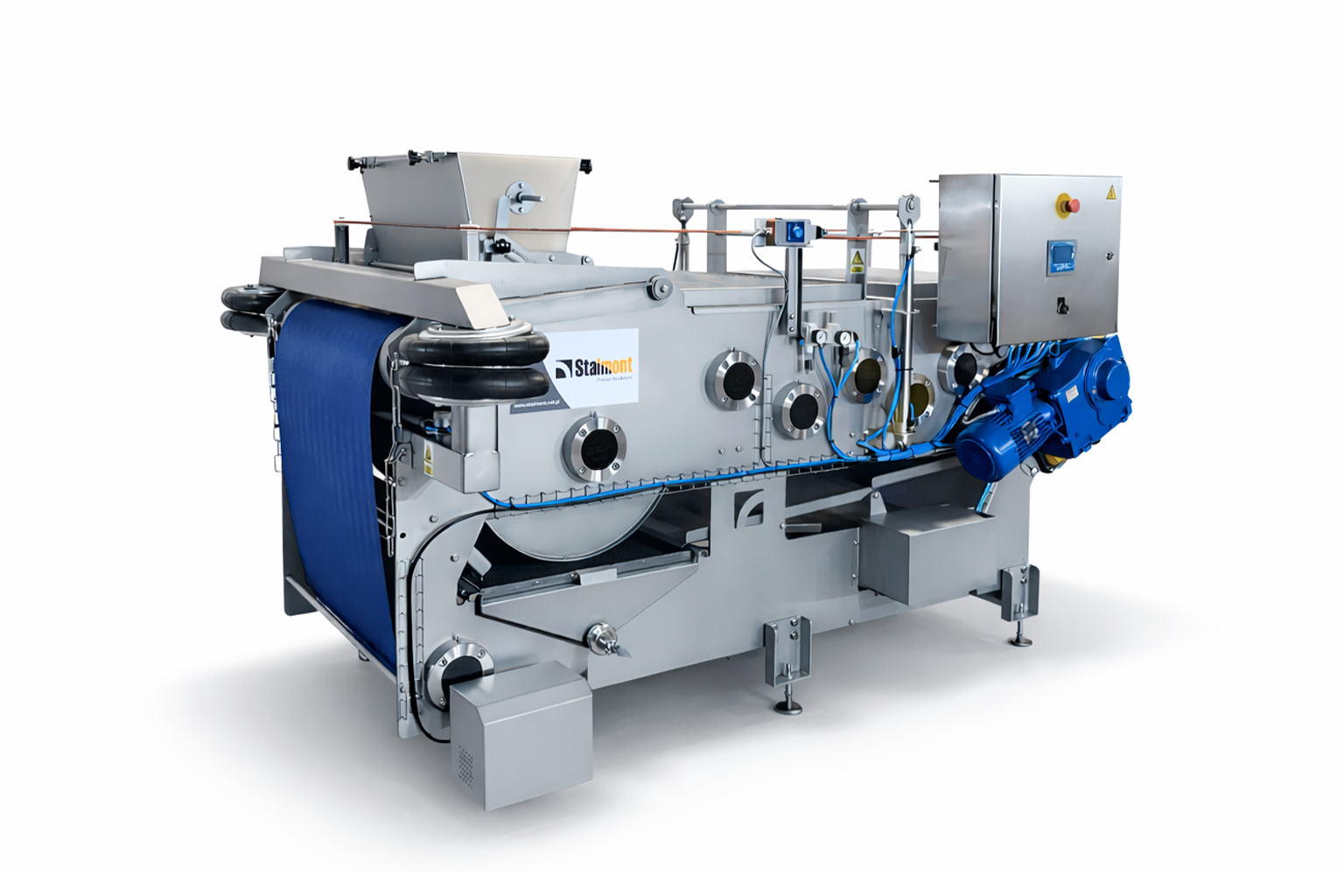
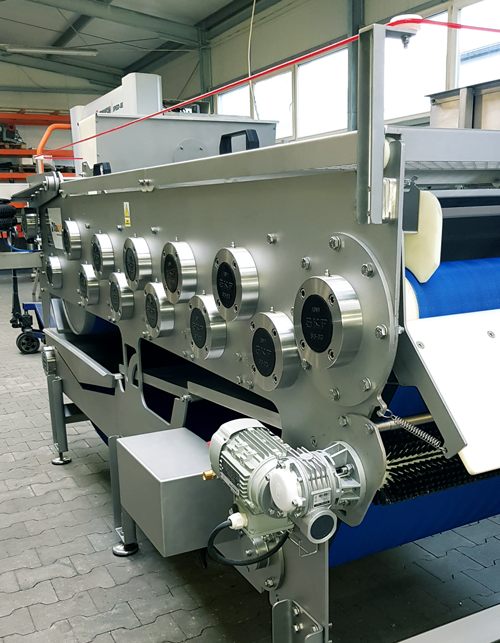
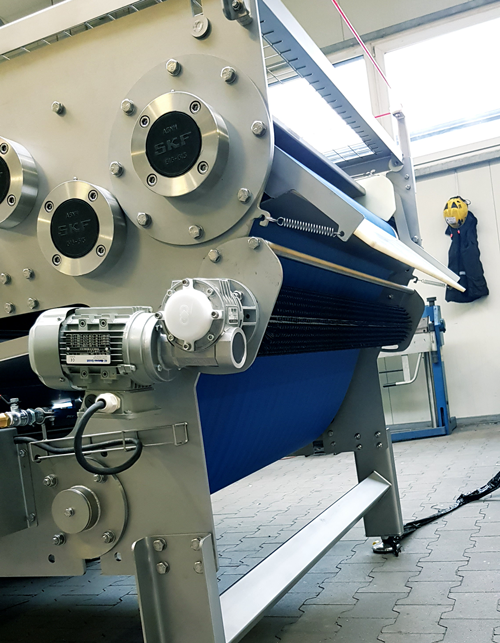
A belt press is used to mechanically separate juice from crushed fruit or vegetable pulp. It is most often installed after a washer with grinder, which prepares the raw material for pressing. The pulp is fed onto the filter belt, where it is gradually compressed between belts and rollers. The juice is collected in the tank, while the pomace is discharged outside the machine.


This solution works particularly well where continuous operation, repeatable product quality and high juice yield are important. Belt presses are used in the production of NFC juice, purées, musts, base juices and semi-finished products for the food industry.

How a belt press works

Feeding raw material to the belt press
1

Raw material feeding

Crushed fruit or vegetables are fed to the belt press continuously and evenly. Correct feeding of the raw material ensures stable machine operation and consistent juice yield.

Spreading the pulp on the filter belt
2

Pulp distribution

The pulp is evenly distributed on the filter belt. Proper distribution creates a uniform layer of raw material and improves juice drainage efficiency.

Gradual pressing of the pulp
3

Gradual pressing

The pulp is gradually compressed between the belt and the roller system. Pressure increases in stages, allowing high juice yield without excessive tearing or grinding of the raw material.

Separation of juice from pomace
4

Juice separation

The juice flows through the filter belt into the receiving system. Pomace is automatically discharged from the machine, which helps maintain process continuity.

Construction of a belt press

Construction of a belt press 1 2 3 4 5 6
Feed hopper of a belt press
1

Feed hopper

It feeds the pulp evenly onto the press belt, ensuring smooth machine operation and reducing raw material losses.

Safety cable of the belt press
2

Safety rope

It allows the press to be stopped quickly in an emergency, increasing operator safety during operation.

Juice tank with belt press pump
3

Juice tank with pump

It collects the pressed juice and transfers it further in the production line. The built-in sieve retains larger fruit particles.

Belt washing system of a belt press
4

Belt washing system

It cleans the filter belt during operation, helping maintain belt permeability, hygiene and pressing efficiency.

Pressing roller system of a belt press
5

Pressing roller system

It gradually increases pressure on the pulp, effectively separating juice from pomace and supporting high yield.

PLC controller and HMI panel of the belt press
6

PLC controller and HMI panel

It allows convenient machine operation, control of operating parameters and monitoring of the pressing process.

Belt press in a juice production line

The raw material first goes to the bin tipper, which enables safe unloading and controlled feeding into the line. Then fruit or vegetables are washed and crushed in a washer with grinder. The prepared pulp goes to the belt press, where juice is separated from pomace. The juice can then be directed to a buffer tank, pasteurizer and filling machine.

Frequently asked questions

How much does a belt press cost?

The price of a belt press depends on capacity, equipment and degree of automation. Our belt presses usually range from approx. 15,900-65,300 EUR net. The higher range applies to large, automated machines intended for plants processing even several dozen tons of fruit per day. We prepare a detailed offer individually after analyzing production needs.

What is the capacity of a belt press?

Our belt presses achieve capacities from approximately 500 to even 4000 kg/h. These are the results obtained by customers in real production conditions, so they may vary depending on the type of raw material, fruit variety, ripeness, degree of crushing and season.

What is the real juice yield?

The actual juice yield from good quality apples is usually about 75%. However, the final result is influenced by many factors, such as the variety of fruit, their hardness, ripeness, degree of crushing and storage time before processing. Apples and other fruits that wait too long to be pressed may produce lower juice yields.

Do you provide service for belt presses?

Yes, we provide service for belt presses, access to spare parts and technical support after purchase. In the event of a failure, we recommend contacting our service directly, many matters can be resolved by phone. If an on-site visit is necessary, we send a service team to fix the problem as quickly as possible and allow production to resume. We also offer support in starting the machine and training the crew.

What is the warranty period of the belt press?

We provide a 36-month warranty on the welded structure of the belt press. For purchased components, such as engines, pumps or automation elements, the warranty period is usually from 12 to 24 months, depending on the manufacturer of the component. After the warranty ends, we provide post-warranty service, assistance in the event of failure and access to spare parts.

What is the lead time?

Order processing time is usually 4 to 10 weeks. We can usually produce smaller models of belt presses in about 4 weeks, while the largest and more complex machines usually require up to 10 weeks of implementation. The exact date depends on the selected model, scope of equipment and current production capacity.

Can I see how the belt press works before ordering?

Yes, before purchasing you can see how the belt press and the entire juice production line work. We cooperate with pressing plants that use our machines, so we can organize a meeting during actual production. Such presentations are possible both in Poland and in other European countries, depending on the availability of a given plant and production date.

What is the payback time for a belt press?

The payback time of the investment depends on the scale of production, the sales price of the juice, the cost of raw materials, packaging, labor and the method of distribution. For example, a belt press with a capacity of approximately 400 l/h can produce up to approximately 3,200 liters of juice in one 8-hour shift. With regular production, this means that the investment in the press can pay off very quickly, especially in plants that sell juice directly or provide services to fruit growers. The exact payback time is best calculated based on the actual costs and the planned selling price of the product.